
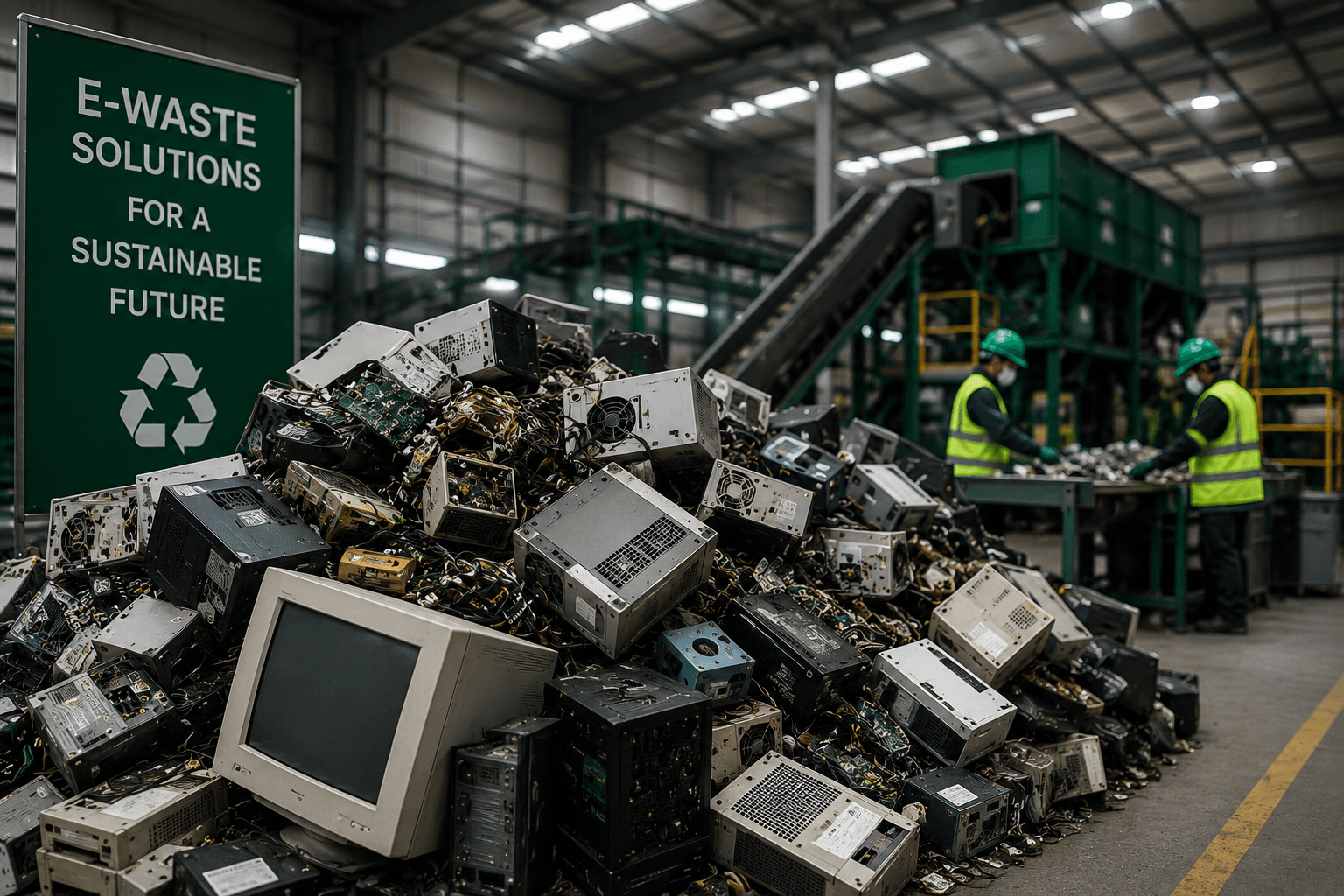
Industrial electronic waste rarely arrives as one neat category. A business may have old laptops in one room, obsolete networking equipment in another, rejected PCB boards in storage, damaged batteries in a maintenance area, and industrial control equipment waiting to be replaced.
The challenge is not simply getting these items out of the premises. A good disposal process should identify what still has value, protect business information, organize the material for evaluation, and ensure non-reusable material is channelized through an appropriate recycling route.
For businesses, the most useful approach is to treat e-waste disposal as an asset recovery and material management process, not just as a waste-removal exercise.
What counts as industrial e-waste?
Industrial e-waste can include electronic equipment that a company no longer needs because it is obsolete, damaged, replaced, rejected or surplus. Depending on the business, this can include servers, desktops, laptops, monitors, networking equipment, PLC and HMI modules, industrial PCs, UPS systems, PCB boards, telecom equipment, electronic components and batteries.
Not every item should automatically be treated in the same way. A working server and a damaged PCB may have completely different recovery routes and values.
1Make an inventory before calling a buyer or collection partner
Start with a simple list. Record the equipment type, approximate quantity, condition and location. If serial numbers or asset IDs are available, keep them with the inventory.
For example:
- 25 laptops
- 10 desktop computers
- 4 network switches
- 2 servers
- 35 kg mixed PCB boards
- 20 kg copper cable
- 15 UPS batteries
Even an approximate inventory is useful at the quotation stage. Photographs can also help when the material is mixed or stored in large lots.
2Separate reusable equipment from scrap
One of the most important decisions is whether an item is potentially reusable.
Working or repairable laptops, desktops, servers, networking equipment, monitors, CCTV equipment and industrial electronics may have a recovery or resale value that is different from scrap value.
This is why dismantling everything before evaluation is usually not the best first step. Preserve complete equipment where practical until its condition and recovery potential have been assessed.
3Protect confidential business information
Storage devices can contain sensitive company information. Before equipment leaves the premises, businesses should follow their internal IT security and data-erasure policies.
For laptops, desktops and servers, pay particular attention to HDDs and SSDs. The correct data sanitization method depends on the organization's security requirements, the storage technology and its policies.
Keep data security as a separate step from scrap valuation. A high-value laptop is still an information-security concern if its storage has not been properly handled.
4Keep different material streams organized
Mixed material makes evaluation harder. Where practical, keep major categories separate:
- IT equipment
- Networking and telecom equipment
- PCB boards
- Batteries
- Copper cables and copper-bearing components
- Industrial electronic equipment
- Small electronic components
This doesn't mean every individual component needs to be dismantled. The goal is to create a clear, understandable lot that can be inspected and valued efficiently.
5Share details for procurement evaluation
A useful quotation request should include the material description, approximate quantity or weight, condition, photographs and pickup location.
For larger business lots, an itemized asset list can make the process considerably easier. It also helps both sides understand what is included in the transaction.
6Inspection, weighing and documentation
For physical scrap, final valuation may depend on actual inspection, segregation and weight. For reusable equipment, model, specifications, working condition and completeness can matter more.
A professional procurement process should make these stages clear before the material is collected.
What happens to the material after collection?
There can be more than one route. Equipment that is suitable for reuse may be refurbished or resold. Material that is not suitable for reuse can be sorted and responsibly channelized to appropriate authorized recycling partners.
This distinction matters because asset recovery and recycling are not the same activity. A business can recover value from usable equipment while ensuring non-reusable electronic material enters a responsible recycling channel.
Common mistakes businesses should avoid
Mixing everything into one lot
A laptop, PCB board, battery and copper cable do not necessarily have the same recovery value. Keeping major categories identifiable can improve evaluation.
Dismantling working equipment too early
A complete working device may have greater reuse value than its material value. Evaluate before dismantling whenever practical.
Ignoring data security
Removing an asset from an office does not automatically remove the information stored on it. Data handling should be completed according to the organization's policy.
Treating batteries like ordinary scrap
Battery handling requires additional care. Damaged, swollen, leaking or otherwise compromised batteries should not be handled as ordinary electronic scrap.
How NextGen approaches industrial electronic scrap procurement
At NextGen E-Waste Solutions, our focus is on industrial e-waste procurement and asset recovery. We evaluate bulk electronic scrap and surplus equipment, identify potentially reusable assets, and work toward an organized collection and recovery process.
Working equipment may be suitable for refurbishment or resale, while non-reusable material is responsibly forwarded to authorized recycling partners.
If your business has surplus IT equipment, PCB boards, batteries, copper scrap, networking equipment or industrial electronics, providing a material list and photographs is a practical starting point for evaluation.
Final takeaway
Responsible industrial e-waste disposal starts before the truck arrives. Inventory the material, separate reusable equipment, protect data, organize major scrap categories and document the lot clearly.
The objective should be simple: recover as much useful value as possible while ensuring non-reusable electronic material follows a responsible recycling route.
Have industrial electronic scrap or surplus IT assets? Share the material details with NextGen E-Waste Solutions for procurement evaluation and collection planning.