
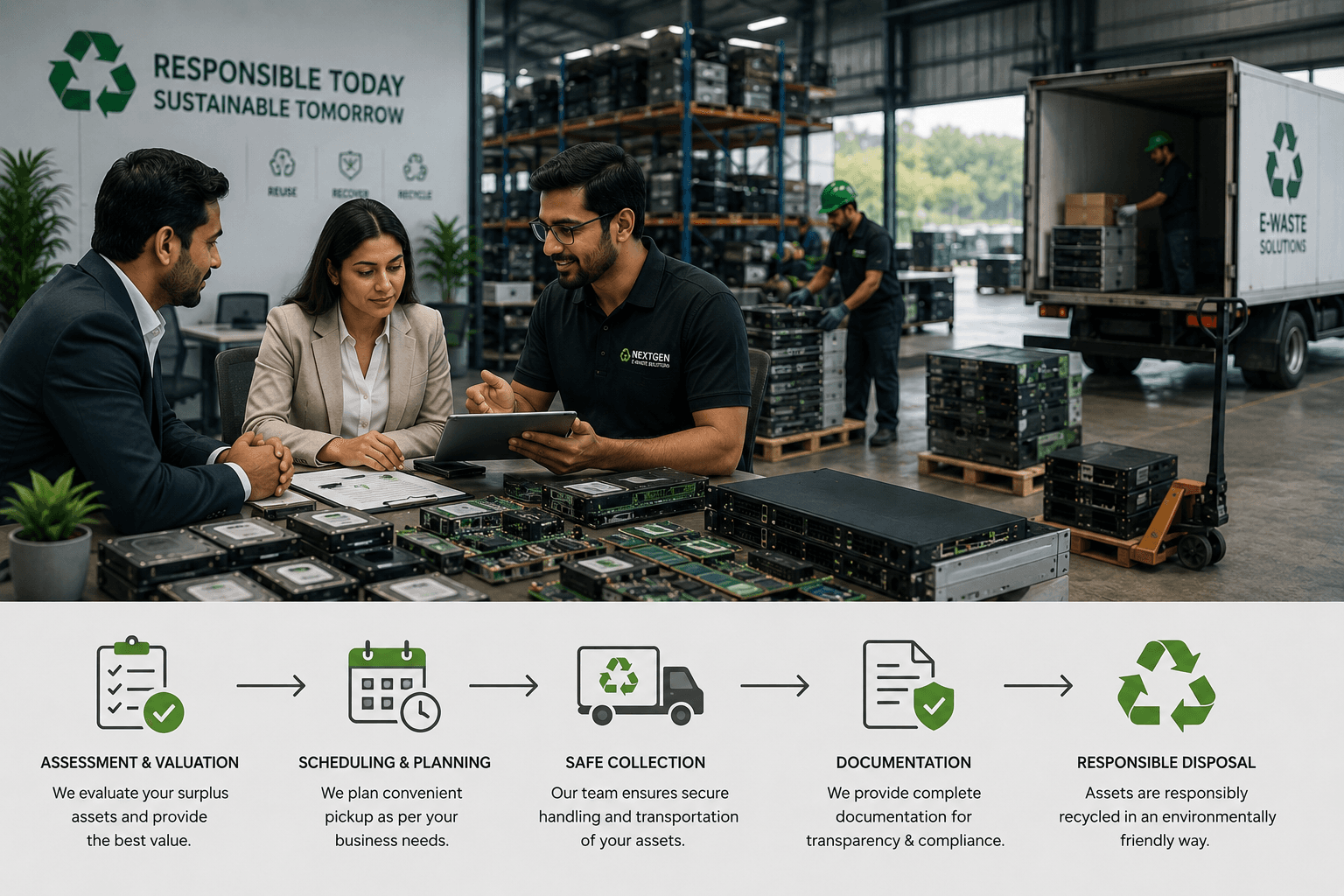
Electronic assets accumulate quietly. A few old laptops after one upgrade, several network switches after a server-room change, rejected PCB boards from production, damaged equipment in a maintenance store—and suddenly a business has a substantial amount of material that needs a clear exit route.
The difficult part is often not finding someone to remove it. The difficult part is understanding what should be recovered, what should be treated as scrap, how the material should be documented, and where it should go next.
That is where a professional e-waste procurement partner can add value.
Procurement is more than scrap collection
A procurement partner looks at the material as an asset and material stream.
A working laptop may be suitable for refurbishment. A server may have reusable components. A PCB board may be evaluated as electronic scrap. Copper cable may follow a different material route.
Separating these possibilities can help businesses recover more value than simply selling a mixed lot as generic scrap.
1. Better organization of surplus equipment
Professional procurement starts with understanding the lot.
Businesses can provide an inventory, photographs, quantities, approximate weights and condition. This creates a common reference before pickup.
2. A clearer quotation process
Electronic scrap prices cannot be accurately determined from a single generic rate. Material category, grade, condition, quantity and market conditions can all matter.
A clear material description allows a procurement company to make a more informed evaluation.
3. Recovery of usable equipment
Not every obsolete device is worthless.
Working laptops, desktops, servers, switches, routers, monitors, CCTV equipment and industrial PCs can potentially have a reuse or resale route, subject to condition and market demand.
Keeping these items identifiable before evaluation is therefore important.
4. Reduced storage burden
Surplus electronics consume warehouse and office space. Once equipment is no longer required, a structured disposal or recovery plan can help organizations clear inventory and maintain cleaner storage areas.
5. Pickup coordination
Large business lots are rarely as simple as putting a box outside a door. Access procedures, loading arrangements, multiple asset categories and documentation may need to be coordinated.
A professional procurement process should establish these details before collection.
6. Responsible channelization
A procurement partner should be clear about the difference between reuse and recycling.
At NextGen, working equipment may be considered for refurbishment or resale. Non-reusable electronic material is responsibly forwarded to authorized recycling partners.
This is the model we believe businesses should understand before handing over electronic material.
What businesses should prepare
Before requesting procurement evaluation, prepare:
- Material or asset list
- Approximate quantity/weight
- Condition information
- Photographs
- Pickup location
- Any relevant asset IDs
- Information about batteries or damaged equipment
The better the initial information, the easier it is to plan the next step.
What a good procurement partner should communicate
Businesses should expect clarity around:
- What material is being evaluated
- How quantity or weight will be determined
- Whether working equipment is treated separately
- How pickup will be coordinated
- What documentation is provided
- How non-reusable material is channelized
A transparent process is more valuable than a headline rate that changes after the material is inspected.
Questions businesses should ask
Before choosing a partner, ask:
- What categories of electronic material do you procure?
- Do you evaluate working equipment separately from scrap?
- How is material weighed or inspected?
- What information do you need before pickup?
- How are non-reusable materials handled?
- Can you provide appropriate transaction documentation?
These questions help businesses compare procurement services on more than price alone.
Where NextGen fits
NextGen E-Waste Solutions is focused on industrial e-waste procurement and asset recovery. We purchase eligible electronic scrap and surplus electronic assets in bulk, evaluate potentially reusable equipment, and work with authorized recycling partners for non-reusable material.
Our objective is to create a practical bridge between businesses holding surplus electronics and the appropriate recovery or recycling route.
Final takeaway
Professional e-waste procurement is useful when a business wants more than simple removal.
The strongest process combines material identification, asset recovery, transparent evaluation, organized collection and responsible channelization.
Have surplus electronic equipment or industrial scrap? Prepare the material details and photographs first. It gives everyone a clearer starting point for procurement evaluation.