
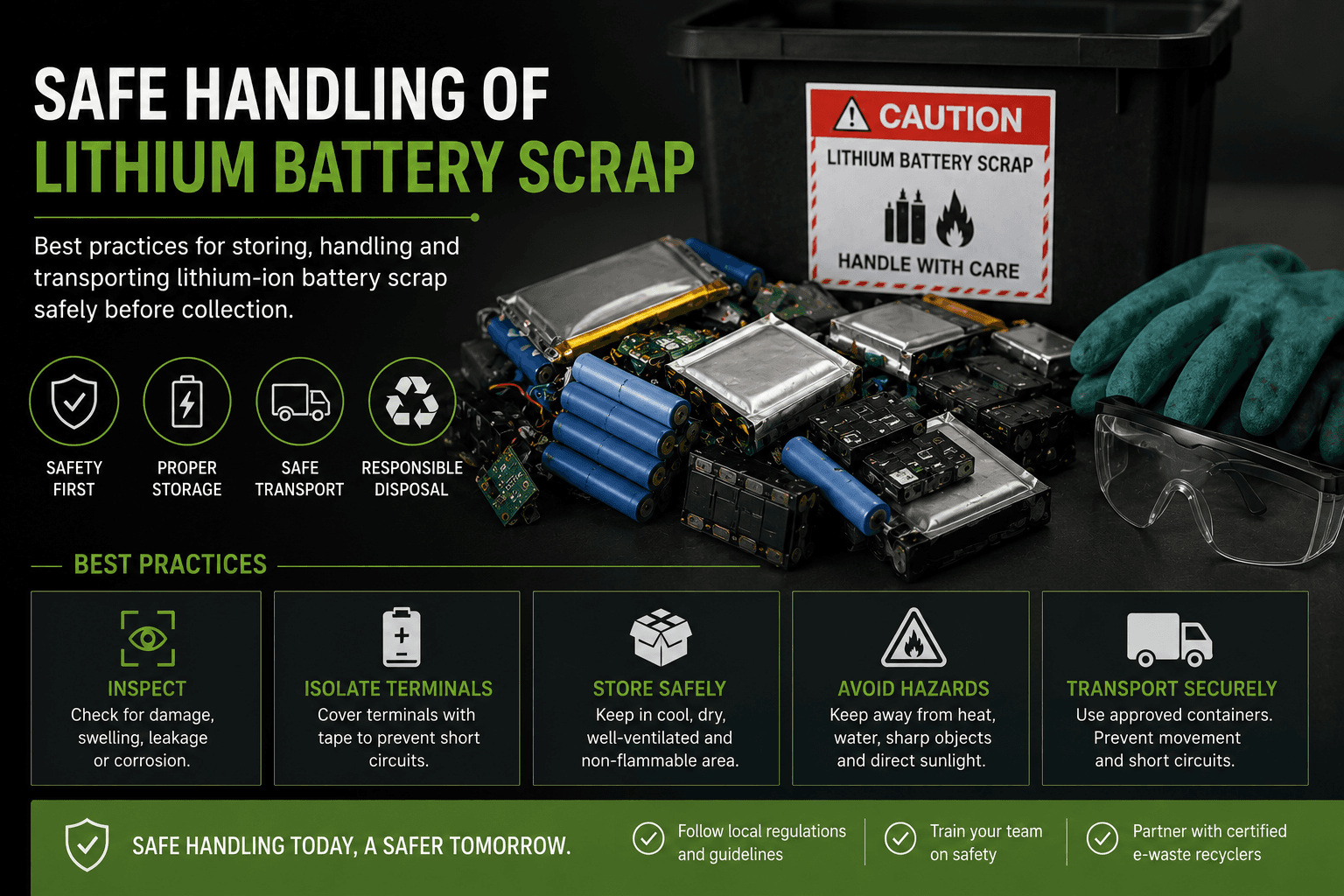
Lithium batteries are now common in laptops, mobile devices, power banks, tools, industrial equipment and many other products. When these batteries reach the end of their useful life, they need more care than ordinary dry electronic scrap.
For businesses, the first priority should be safe handling and segregation. Valuation and collection come after the material has been identified and made safe for movement.
Where lithium battery scrap comes from
Businesses can generate lithium battery scrap from:
- Laptops
- Mobile devices
- Tablets
- Power banks
- Portable equipment
- Industrial electronic systems
- Battery packs used in backup or specialized applications
The exact battery chemistry and pack design can vary, so don't assume all batteries should be treated identically.
Why battery condition matters
A normal intact battery and a damaged or swollen battery are not equivalent.
Pay attention to signs such as:
- Swelling
- Leakage
- Cracks or physical damage
- Burn marks
- Unusual heat
- Damaged terminals
- Signs of short-circuiting
If a battery appears damaged or unsafe, do not treat it as routine scrap. Follow your organization's safety procedure and use an appropriate specialist handling route.
Basic storage principles
For routine, intact battery scrap, businesses should keep the material in a dry, controlled location away from unnecessary heat, ignition sources and physical damage.
Prevent terminals from contacting conductive materials where appropriate, and follow the battery manufacturer's or organization's safety guidance for the specific battery type.
The exact storage and transport requirements can depend on battery chemistry, condition, quantity and applicable regulations.
Keep batteries separated from general e-waste
Do not simply throw loose battery packs into a mixed box containing metal scrap, PCB boards and cables.
Separate battery material and clearly identify it. This helps with both safety and collection planning.
What information should you provide for collection?
A procurement enquiry should ideally include:
- Battery type if known
- Approximate quantity
- Approximate weight
- Condition
- Photographs
- Pickup location
Mention any damaged or swollen units before collection. This information is important for determining an appropriate handling and transport approach.
Laptop and UPS batteries are not automatically the same
The phrase "battery scrap" covers many different products. A laptop battery pack, industrial battery system and other battery types can differ in chemistry, construction, capacity and handling requirements.
Separate identifiable battery categories whenever practical instead of mixing everything together.
Don't dismantle battery packs casually
Battery packs may contain cells, protection electronics and other components. Uncontrolled opening, puncturing or cutting can create safety hazards.
If your organization does not have an appropriate procedure and equipment for dismantling, leave battery packs intact and seek a suitable handling route.
Battery scrap and responsible channelization
Battery material should be handled through appropriate collection and recycling channels. At NextGen, we focus on procurement and organized collection of eligible electronic and battery scrap, with non-reusable material responsibly forwarded to authorized recycling partners.
We do not recommend informal dismantling or unsafe recovery methods.
A simple checklist before collection
Before requesting pickup:
- Identify the battery type where possible
- Separate batteries from general scrap
- Check for damaged or swollen units
- Record approximate quantity/weight
- Take representative photographs
- Keep the material in a suitable controlled location
- Inform the collection/procurement partner about condition
Final takeaway
Lithium battery scrap should be approached as a safety-sensitive material stream, not ordinary metal scrap.
Good segregation, careful storage, clear communication and an appropriate recycling route make the process safer and more organized.
Have battery scrap available in bulk? Share the battery type, approximate quantity, condition and location with NextGen E-Waste Solutions before collection planning.